Hands-Free Tips for Perfectly Watering Raised Garden Beds
Hands-Free Tips for Perfectly Watering Raised Garden Beds
Watering raised garden beds shouldn’t be a strenuous task. Discover hands-free solutions that will allow you to enjoy your vegetables without the hassle. Let’s dive into efficient methods for automation and irrigation!
The Ideal vs. Reality
In the late ’90s, a famous diaper commercial proclaimed, “Live and learn, and get a new brand of diapers.” Isn’t that how we all feel about gardening? The vision may be serene, but the reality often tells a different story.
Growing up inspired by Beatrix Potter and Martha Stewart, I imagined tending my garden in stylish clogs, gracefully watering my plants while enjoying the sunshine. Instead, I was left swatting mosquitoes while lugging a heavy watering can and sweating profusely.
Searching for Solutions
This led me on a quest for a better irrigation option. After some trial and error, I finally found the perfect solution that allows for hands-free watering of my raised beds—an automatic drip irrigation system.
Soaker Hose vs. Drip Irrigation
Many gardeners opt for soaker hoses because they’re widely available and initially effective. However, my experience taught me otherwise. After a year, clogging issues made the hose ineffective, and the bulkiness of the hose became a hassle in smaller beds.
That’s when I discovered Rain Bird. Their drip irrigation systems were a revelation, shifting my gardening experience significantly.
Why Choose Rain Bird?
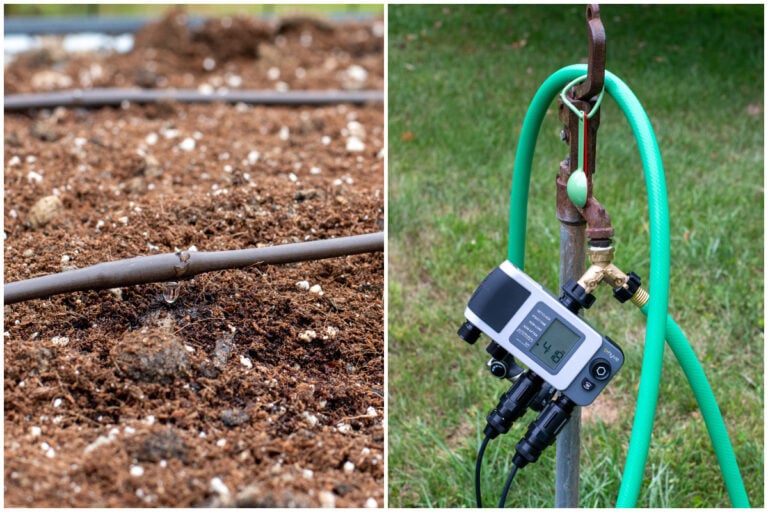
Rain Bird’s raised bed drip irrigation kit has become my go-to choice, supplying ample tubing and connectors at a great price. With eight raised beds in my garden, I managed to set up the entire system using just four kits, with extras for future repairs or expansions.
Included in the Kit:
- 25’ of connecting tubing
- 35’ of emitter tubing
- A pressure regulator, filter washer, and faucet adapter
- 10 stakes for securing tubing
- 10 tees, elbows, couplings, and plugs
Installation Tips
Here are a few tips for setting up your drip irrigation:
- Soften the emitter tubing by uncoiling it and allowing it to sit in the sun for about an hour.
- Plan your layout on paper to visualize your setup clearly.
- Always measure before cutting—though a bit of eyeballing can work too!
- Bury the tubing in walking areas to eliminate tripping hazards.
- Ensure the emitter tubing rests just above the soil for effective drip irrigation.
- Use plumber’s tape on spigots to prevent leaks.
Bonus: Automation for Convenience
After installing your drip irrigation system, consider automation to make watering effortless. All you need are two extra devices: a watering station and a Wi-Fi hub. I use the Orbit B-hyve system.
This system offers three ways to manage your watering schedule: a manual program, Bluetooth control via your phone, or full automation through Wi-Fi. I love my weekly schedule that waters my garden on autopilot, leaving me free to enjoy life away from home!
Save Water while Watering
The Orbit B-hyve app is another fantastic feature. Enter your address, and it will consult local weather forecasts to skip watering if rain is expected. With multiple watering zones available, you can optimize water usage efficiently.
The Importance of Mulch
Let’s not forget the crucial role mulch plays in gardening. Combining drip irrigation with a two- to three-inch layer of mulch can significantly enhance your garden’s health. Mulching prevents soil compaction and erosion, retaining moisture while suppressing weeds.
Even during peak summer, the soil beneath the mulch remains cool and damp, making my watering efforts much more effective. Without mulch, raised beds can quickly dry out, stressing your plants.
Conclusion
With the right drip irrigation system from Rain Bird and the convenience of automation, watering your raised garden beds can be stress-free. Don’t forget to mulch for the best results. Now, I can finally enjoy my gardening without breaking a sweat—who knows, I might even don that linen shirt while admiring my thriving plants!