Cheesy Ham Pasta Bake with Creamy Béchamel Sauce Recipe
Cheesy Ham Pasta Bake with Creamy Béchamel Sauce Recipe
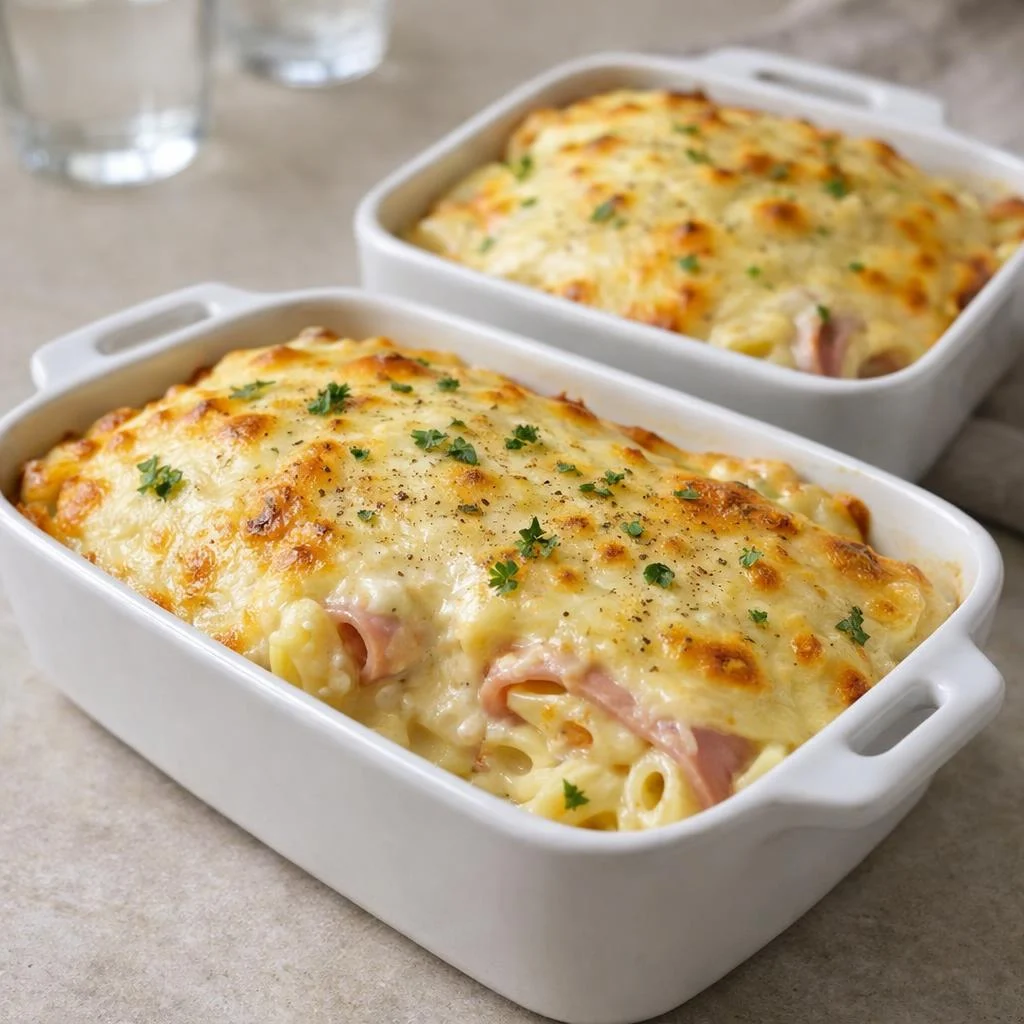
The cheesy ham pasta bake fills your kitchen with warmth and comfort as it bakes in the oven. Creamy, generous, and surprisingly easy to make, this dish comes together when you master two key techniques—creating a smooth béchamel sauce and assembling everything so it holds together beautifully in the bake. In this guide, I’ll show you how to achieve a golden crust and a gooey interior perfect for Sunday lunches, busy weeknights, or family meals where everyone wants to dig in.
Why This Cheesy Ham Pasta Bake Always Works
The secret to this dish lies in the balance of three core elements:
- Pasta: They should be slightly firm (al dente) to continue cooking in the oven without turning mushy.
- Béchamel: It must be thick and well-blended. A sauce that’s too thin won’t coat properly, while overcooking can lead to lumps.
- Cheese: It adds indulgent flavor and structure to the bake, helping it hold together and create an even crust.
When you slice into it, you should see distinct layers: pasta coated in sauce, ham evenly distributed, and a creamy base that clings just enough without becoming soggy.
The Benefit of a Make-Ahead Bake
This cheesy ham pasta bake is perfect for prepping in advance. You can assemble everything ahead of time and then bake it just when you’re ready to serve, resulting in a consistently golden dish with a creamy texture on the inside and a beautifully browned top.
Essential Ingredients for a Comforting Bake
Here are the ingredients for a family-friendly dish, with easily measurable quantities:
Pasta: The Base for Holding the Bake Together
Pasta type: 400 g penne or rigatoni
Why this choice? Ruffled shapes like penne or rigatoni hold the béchamel better and ensure even coating. In the bake, they stay delectable without turning to mush.
Ham: For Flavor and Distribution
Sliced ham: 250 g
The ham can be cut into cubes or strips for mixing. It provides savory flavor without being too heavy; its melting action in the oven adds to the comforting experience.
Butter and Flour: The Backbone of Béchamel
Butter: 50 g
Flour: 50 g
These work in tandem, with butter providing depth and the flour thickening the béchamel to the right consistency, ensuring it coats the pasta perfectly.
Whole Milk: The Creaminess Factor
Whole milk: 800 ml
Whole milk leads to a richer, more stable béchamel that remains smooth and creamy during baking. Using semi-skimmed milk might result in a less velvety sauce.
Cheeses for Topping: Flavor, Melt, and Color
Shredded cheese (emmental or comté, or a mix): 180 g
Optionally, mozzarella: 50 g
The main shredded cheese contributes to the browning and binding of the sauce. Adding mozzarella strengthens the gooey texture and enhances creaminess upon slicing.
Seasonings: The Little Touch that Makes a Difference
Salt: to taste
Pepper: to taste
Nutmeg: a pinch
Salt balances the béchamel (keep in mind the ham is already salty). Pepper adds a subtle spice, while just a hint of nutmeg provides a warm, aromatic note to the sauce.
Optional Garlic or Onion: For Extra Depth
Garlic or onion: A small amount (optional)
Feel free to add a touch of garlic or finely chopped onion to enhance the flavor, but it’s not essential. The core flavors of pasta, ham, béchamel, and cheese are paramount.
The Importance of Each Ingredient
Even when simplifying:
- Al dente pasta: They provide structure; without it, the bake won’t slice nicely.
- Sliced ham: Contributes flavor and a contrast to the creamy sauce.
- Thick béchamel: It binds the bake together, giving a creamy not-separated filling.
- Cheese mixed in and on top: Mixed cheese makes the sauce richer, while the top layer creates the golden crust.
- Nutmeg: A tiny hint makes a big impact on flavor.
Selecting the Right Products
For consistent results:
- Use quality pasta (they should stay firm after cooking).
- Choose a pinkish ham that is not too wet.
- Opt for whole milk (it enhances creaminess).
- For cheese, prefer a shredded variety that melts well; emmental/comté work beautifully in gratins.
By using these products, especially for larger gatherings or when prepping in advance, you can maintain a nice texture when reheating the dish.
Reasonable Substitutions if You’re Missing Ingredients
- Without mozzarella: Use 100% of the primary shredded cheese; the bake may be less stringy but still delicious.
- Without nutmeg: Substitute with a bit more pepper and perhaps a touch of white pepper or finely chopped herbs.
- Without garlic/onion: Leave them out; the béchamel will still shine due to the butter, nutmeg, and cheese.
Avoid substituting cheese with options that don’t melt well, as this can affect the crust’s appearance and melt evenly.
Recommended Equipment and Preparations Before Starting
To ensure a smooth process, gather:
- A large pot for cooking pasta.
- A saucepan for the béchamel, ideally with a thick bottom.
- A whisk (or a sturdy wooden spoon) to prevent lumps.
- A baking dish (or individual dishes for serving).
- A spoon or spatula for evenly distributing sauce and ham.
Before you begin:
- Dice or slice your ham.
- Grate the cheese if needed (or check that your pre-shredded variety melts well).
- Measure the butter, flour, and milk to streamline the béchamel process.
Practical tip: Keep the cheese ready in two batches (one for the sauce, one for topping). This helps achieve a golden finish.
Step-by-Step Recipe Preparation
1) Cook the Pasta Al Dente
Boil a large pot of salted water (it should taste slightly salty). Add the penne or rigatoni, cooking them al dente by checking the package instructions but stopping 1 minute early if they seem tender.
Stir initially to prevent sticking. Once done, drain thoroughly. If they seem a bit dry, reserve a small amount of cooking water; a few tablespoons can help loosen the béchamel later (optional). The goal is pasta that remains firm for the oven.
2) Prepare a Smooth Béchamel Sauce
In a saucepan over medium heat, melt the butter. Once it foams and turns slightly nutty (not browned), add the flour.
Whisk for 30 to 60 seconds until smooth and smelling of cooked flour—this is crucial for a successful béchamel.
Gradually pour in the whole milk, starting with a third while whisking vigorously, then add the rest. Lower the heat.
Stir regularly for about 5 to 8 minutes until it thickens enough to coat: when you pass the whisk, it should leave a trail for a few seconds before disappearing.
Season with salt, pepper, and nutmeg. If using garlic or onion, add it here and let infuse for 1 minute before removing from heat.
Tip to Prevent Sauce Splitting
Remove the saucepan from heat and stir in half the shredded cheese (emmental/comté or mix). Blend until fully melted. This method helps to keep the sauce smooth and shiny.
3) Assemble the Bake: Neat Layers for Perfect Structure
Choose a white baking dish or small individual ones. Spread a thin layer of béchamel at the bottom to prevent sticking.
Next, add:
- The drained pasta
- The sliced ham (arrange it in strips or cubes for even distribution)
- The béchamel with cheese
Gently combine to coat the pasta; it should be covered but not crushed.
Key observation: as you mix, the thick sauce should cling rather than run freely.
4) Final Topping and Baking
Preheat the oven to 200°C (high heat: convection setting if possible).
Cover the surface with the remaining shredded cheese, spreading it evenly to create a golden crust.
Bake for 15 to 20 minutes.
Start checking at 15 minutes: the top should turn golden, with some areas more melted (this is normal). If it colors too quickly, lower to 190°C and continue baking.
Signs of Success
- The bake is hot throughout (bubbles at the edges).
- The sauce is creamy and well-mixed: the layers hold as you cut.
- The top is golden, not burnt—a honey color, not dark brown.
- In the center, the surface is slightly softer than the edges, as melting occurs more gently.
5) Rest Before Serving for Clean Cuts
Remove the dish from the oven and let it rest for 5 minutes.
This resting time helps stabilize the béchamel so it firms up just enough, preventing spillage on the plate. Serve immediately.
Tip: If using individual dishes, resting also helps maintain a good structure for each portion.
Common Mistakes to Avoid (and How to Fix Them)
- Overcooked pasta: If they’re mushy when draining, they will continue to soften and the bake will become paste-like. Aim for al dente (usually stopping 1 minute early).
- Too runny béchamel: It won’t coat and the bake will become soggy. To fix, return to low heat for 1-2 minutes, stirring until thick.
- Cheese mixed in while on the heat: This risks a grainy sauce. Rule: mix in cheese off the heat.
- Not hot enough oven: Leads to a pale top that lacks browning. Set to 200°C and stick to timing.
- Too much mixing once assembled: Maintain distinct layers. Gently mix to coat.
Chef Tips for an Even More Indulgent Bake
- Achieve a well-browned top without burning: sprinkle the cheese in two stages (half in the sauce, half on top). This ensures an even crust.
- For an extra gooey effect, incorporate mozzarella into the filling with the main cheese, then top with the rest.
- If preparing ahead, give the bake a gentle warm-up in the oven just before serving. The cheese will melt again, keeping the béchamel creamy.
Simple Variations (Without Changing the Core)
- Without mozzarella: Make the bake with only the primary shredded cheese; it will be less gooey but still creamy.
- Without nutmeg: Replace with more pepper and a hint of white pepper or finely chopped herb (like parsley). The béchamel flavor will be less distinct but still harmonious.
- Without garlic/onion: Leave them out; the béchamel will still shine from the butter, nutmeg, and cheese.
- If using thickly sliced ham, cut it into finer strips for better distribution.
Serving Suggestions
Serve this cheesy ham pasta bake with something fresh and crunchy to balance its richness:
- A simply dressed green salad (olive oil + lemon or mild vinegar).
- Roasted vegetables (zucchini, carrots, broccoli) for a complete meal.
- A side of pickles or a light touch of another pickled item (it’s very effective).
Plating:
Wait for the 5-minute rest. Serve a neat portion, ensuring a bit of cheese clings to the spoon. You can add a touch of pepper lightly and, if desired, a sprinkle of chopped parsley (in moderation to maintain the bake’s flavor).
Preparation in Advance (Stress-Free)
You can assemble the bake before cooking:
- Cook and drain the pasta al dente.
- Prepare the béchamel and mix in half the cheese off the heat.
- Combine pasta, ham, and béchamel in the dish.
- Cover and store in the refrigerator.
For Cooking:
Add the remaining cheese on top if not already covered. Bake directly or let it sit for 15 minutes at room temperature if taken out of the fridge.
Expect to add a bit more cooking time (5 to 8 minutes more depending on the dish size) until you achieve a uniformly golden top.
Storage
Once baked, keep the dish in the refrigerator for up to 2 days in an airtight container.
For Reheating:
Heat in the oven at 180°C for 12 to 18 minutes (dependent on thickness), or use the microwave with a cover, though this will not produce a “gratin” finish.
If the texture seems less creamy upon reheating, a tiny splash of milk or a bit of added water can help soften it back up (depending on the reheating method and portion size).
Approximate Nutrition (Per Serving)
For reference, each serving (out of 6 to 8 portions, depending on the dish) contains approximately 450 to 600 kcal. The variation mainly depends on the cheese type used, how much mozzarella added, and the total number of servings.
FAQ
How do I prevent béchamel from becoming lumpy?
To achieve a smooth béchamel, cook the flour with butter for 30 to 60 seconds, then gradually add the milk while whisking continuously. After that, lower the heat and stir regularly. If lumps form, whisk vigorously off the heat or blend briefly.
Is it really necessary to cook the pasta al dente for a bake?
Yes. The pasta continues to cook in the oven and absorbs the sauce. If they are cooked too soft initially, the bake will become heavy and “mushy.” So, aim for al dente—usually stopping 1 minute earlier than package directions, then drain thoroughly.
Why is my bake too watery?
Often, this is due to a béchamel that hasn’t thickened sufficiently or wet pasta (not drained well). Ensure the sauce coats and thickens for 5 to 8 minutes on low heat. Drain the pasta well, then mix gently for coating: the béchamel should remain creamy, not runny.
Can I prepare the bake a day in advance?
Sure! You can assemble the base (pasta + ham + béchamel) and store in the fridge. On the day of serving, add the surface cheese if needed, then bake. If cold from the fridge, allowing it to sit for 15 minutes will ensure more even cooking.
What cheese should I use for a good melt?
A grated cheese like emmental or comté will give a beautiful browning and melt evenly. A mix of cheeses is perfect for enhanced flavor. Mozzarella is also great for stretchiness, particularly if mixed into the sauce and added on top.
Conclusion
And there you have it: a comforting cheesy ham pasta bake with a rich béchamel sauce and perfectly layered ingredients. Give it a try, share your well-melted portions, and save this recipe for your next cozy meal!