10 Perennials You Should Avoid Planting in Your Garden
10 Perennials You Should Avoid Planting in Your Garden
As an avid gardener and garden writer, I often capture the beauty of plants at various stages of their growth, and I love sharing these moments on Instagram. However, there’s one particular plant that won’t be gracing my grid any time soon: yellow loosestrife (Lysimachia punctata). Despite thriving in my garden for four years, I hesitate to showcase it, as I don’t want to inspire anyone to plant it in their own spaces.
Why You Should Be Cautious with Certain Plants
It’s essential to understand why some plants might be better off in pots rather than in the ground. Yellow loosestrife is a prime example; it spreads so aggressively that you may end up regretting your decision if planted directly in your garden. My small space has forced me to keep certain plants contained, and I encourage others to do the same.
Before we delve into the list, let’s clarify one important term: ‘invasive.’ Not every vigorous grower qualifies as invasive. For a plant to be deemed invasive, it must:
- Be non-native to your area
- Crowd out native species, causing imbalance in the ecosystem
Thus, a vigorous grower may not necessarily be invasive, especially if it thrives in your local ecosystem. Local conditions can also impact a plant’s growth, making it crucial to consult local horticultural resources before planting.
The Top 10 Perennials to Avoid Planting in Your Garden
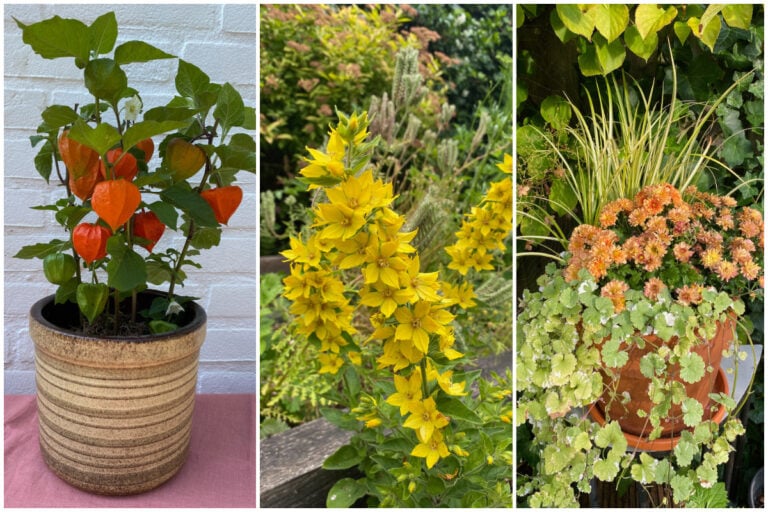
1. Yellow Loosestrife (Lysimachia punctata)
This herbaceous perennial thrives in sunny spots and is known for its striking yellow flowers. Unfortunately, it forms dense mounding colonies and can quickly become unmanageable. I keep my yellow loosestrife in a pot to prevent it from taking over.
2. Purple Loosestrife (Lythrum salicaria)
Introduced to North America in the early 1800s, purple loosestrife is beautiful but can become aggressive. It grows well in damp areas and can expand rapidly, so it’s best to keep it contained in pots.
3. Chameleon Plant (Houttuynia cordata)
This visually appealing plant spreads rapidly through rhizomes and can overwhelm your garden before you realize it. I recommend growing it in a pot to enjoy its vibrant colors without the hassle of managing its growth.
4. Chinese Lantern Plant (Physalis alkekengi)
Known for its papery husks that turn vibrant orange in the fall, the Chinese lantern plant can also be invasive. I keep mine in a pot to prevent it from overtaking my garden.
5. Creeping Charlie (Glechoma hederacea)
Often used as a spiller in container gardens, Creeping Charlie can root itself and become troublesome if not monitored. It requires regular trimming to prevent it from becoming problematic.
6. Lesser Periwinkle (Vinca minor)
Often sold as a charming ground cover, lesser periwinkle can spread vigorously. If you’re not prepared to keep it contained, it’s wiser to choose a less aggressive option.
7. Myrtle Spurge (Euphorbia myrsinites)
This low-maintenance perennial can thrive in sandy soil but may also spread aggressively in certain climates. Planting it in a container or a contained area is advisable to prevent it from taking control.
8. False Shamrock (Oxalis)
While the purple shamrock is lovely as a houseplant, other varieties can become invasive if left unchecked. I recommend keeping them in pots to maintain control over their growth.
9. Lily of the Valley (Convallaria majalis)
With its delightful scent and ability to thrive in shade, lily of the valley is tempting. However, its rapid spread can lead to chaos in your garden, making it better suited for pots.
10. Yellow Tansy (Tanacetum vulgare)
Common in the wild, yellow tansy spreads quickly and can overcrowd any container. If you’re interested in using it for drying purposes, it’s best to harvest from the wild rather than planting it in a garden.
Conclusion
In summary, while many perennials can bring beauty to your garden, it’s crucial to be selective about which ones you choose to plant. Keeping these 10 vigorous growers in pots allows you to enjoy their charm without the eventual overwhelm. Always consider local advice and conditions to ensure a thriving, manageable garden.