Moist Lemon Cake (No Frosting) – A Zesty Delight with Powdered Sugar
“`html
Moist Lemon Cake (No Frosting) – A Zesty Delight with Powdered Sugar
The moist lemon cake is one of the simplest ways to brighten up your kitchen. Zesty, fragrant, and with a fine crumb that melts in your mouth, it’s topped with a dusting of powdered sugar that makes it feel homemade without any complicated treats. In this recipe, lemon is not just for flavor; it enhances cravings, boosts aroma, and gives a juicy yet controlled sensation.
Why This Moist Lemon Cake Works
This cake is designed to be:
- Moist – thanks to the eggs and melted butter (or neutral oil).
- Tender – achieved with a well-balanced batter (neither too dry nor too wet).
- Highly aromatic – thanks to carefully measured lemon zest and juice.
The key to success is balance: the zest carries the aroma (the finer the zest, the more fragrant), while the juice adds acidity without making it soggy. And importantly, we avoid overcooking, which can dry out an otherwise perfect texture.
Essential Ingredients for a Flavorful Lemon Cake
Here are the base ingredients. I’ll provide precise quantities to ensure the batter holds together and the crumb stays moist.
Ingredient List and Their Functions
- 2 untreated lemons (zest + juice): essential for flavor. The zest provides the essence of lemon (a more rounded and bright aroma), while the juice contributes acidity and moisture. As juice can vary by lemon, it should be measured carefully.
- 3 eggs: they add richness and a softer crumb, helping to bind the batter so the cake doesn’t crumble.
- 150 g of sugar: provides a balance against acidity and contributes to a fine, slightly airy texture.
- 120 g of melted butter or 90 g of neutral oil: melted butter gives a delicate moisture and subtle flavor, while neutral oil keeps it moist yet light.
- 200 g of flour: this gives the structure of the cake. Properly dosed flour ensures a fine crumb without a “dry cake” texture.
- 1 packet of baking powder (about 10–11 g): provides lift and prevents a dense texture.
- 1 pinch of salt: enhances flavors without making it salty, clarifying the taste of lemon.
- Powdered sugar (for finishing): for a clean and elegant final touch that should be applied after cooling.
The Importance of Lemon: Zest Without Bitterness, Juice Controlled
Lemon is the heart of this recipe. Two points make the difference:
- Zest without touching the white pith: the white part is bitter. You want fine, yellow, aromatic zest.
- Juice measuring: too much liquid can weigh down the batter and make it hard to cook through correctly. Conversely, too little juice removes the appealing tartness.
Flour and Baking Powder: A Fine and Stable Crumb
The flour needs to absorb just enough to create a structure that cuts cleanly. Baking powder keeps the cake fluffy without it being too dense, aiming for a cake that’s moist and evenly textured.
Can You Substitute Ingredients?
Yes, but with coherent substitutions to maintain texture.
Melted Butter or Neutral Oil
- Melted butter: gives a richer taste.
- Neutral oil: provides a softer moistness, useful if you prefer a milder flavor.
Lemon for Another Citrus
You can try lime or a combination of lemon and lime, but acidity and intensity will change. It’ll still be good, but the signature citrus aroma may not be as bright. To keep the spirit, stick with lemon.
Flour
If you use another type of flour (like whole wheat), the crumb may become denser. For a result similar to the described version, use regular wheat flour.
Essential Equipment for Easy Removal and a Beautiful Surface
For an even result (and that lovely golden hue we love on lemon cakes), prepare:
- A round mold (ideally fluted, like a bundt pan): it helps achieve an attractive presentation.
- Parchment paper or butter + flour for the mold: to ensure easy removal.
- A fine zester: guarantees fragrant zest without bitterness.
- A whisk and a spatula: for gentle mixing without overworking.
Preparations Before You Start
- Take the butter out if needed and plan to melt it at the right time.
- Wash and thoroughly dry your lemons (for easily recoverable zest).
- Butter and flour the mold (or plan for a reliable non-stick solution).
- Set up a space to cool the cake without covering it too soon (to sprinkle with powdered sugar later).
Choosing Quality Ingredients for a Restaurant-Quality Result
- Untreated lemons: this is the number one condition for fragrant zest. A waxy or overly chemical lemon loses its brightness quickly.
- Fresh eggs: they produce a better-holding batter and a cleaner taste.
- Sugar: standard sugar works perfectly. The goal is a clean balance against acidity.
- Good quality butter: adds a round note, while neutral oil compensates if needed, but butter usually imparts more richness.
Signs to Watch for Before Baking
Even though the complete preparation comes next, you can spot key points already:
- The zest should be fine, yellow, aromatic, without white traces.
- The juice needs to be prepared and measured to avoid a too liquid batter.
- The batter should be homogenous and smooth before going into the oven; a too grainy or thick texture indicates an imbalance (often due to poorly measured flour or uncontrolled juice).
Common Mistakes to Avoid for Keeping It Moist
- Overbaking: the number one reason lemon cakes turn dry. It’s better to aim for “just baked” than “well done.”
- Zesting too deeply: this will introduce bitterness that masks the lemon flavor.
- Forgetting to cool before adding powdered sugar: it may melt, creating a paste instead of a lovely dusting.
Step-by-Step Recipe Preparation
1) Prepare the Oven and the Mold
Preheat the oven to 170°C (convection if possible). The cake should bake evenly to maintain a fine crumb.
Generously butter the mold (ideally a white fluted round pan) and then flour it (or, if not available, use a good non-stick mold). Shake off the excess flour to ensure the batter does not stick and the surface browns nicely.
2) Zest Without Touching the White and Press the Lemons
Wash and thoroughly dry your 2 untreated lemons.
- Zest: use a microplane or fine grater. Only grate the yellow part. If you see any white, stop: this bitterness will detract from the cake’s brightness.
- Juice: press the lemons next. Since juice varies by fruit, pour it into a measuring glass if possible, and set aside.
3) Mix Eggs and Sugar
In a bowl, crack the 3 eggs and add 150 g of sugar.
Whisk for 2 to 4 minutes: look for a lighter, slightly frothy mixture that is homogeneous. The batter should appear smooth, without visible sugar lumps.
4) Add the Melted Butter (or Neutral Oil)
Melt the butter and let it cool (it should remain liquid but not hot). Gradually add this to the egg-sugar mixture.
Mix with a whisk for 30 to 60 seconds.
If you choose the neutral oil (90 g), add it directly. The mixture should remain fluid without “separating.”
5) Incorporate the Dry Ingredients
In another bowl, combine 200 g of flour, 1 packet of baking powder, and 1 pinch of salt.
Gradually add the dry ingredients in two parts into the mixing bowl. Stir gently: as soon as the flour is incorporated, stop. The batter should become smoother and slightly thick, not as runny as crepe batter.
6) Add the Juice and Zest
Now pour in the lemon juice and add the zest.
Mix until you achieve a batter that is uniformly yellow, aromatic, and has a soft texture. You should smell the lemon as soon as it’s incorporated—that’s a good sign.
7) Fill the Mold Without Compacting
Pour the batter into the prepared mold and gently smooth the surface with a spatula.
Give the mold a little tap on the work surface to remove air bubbles and promote even baking.
8) Baking: The Right Browning Level to Keep it Moist
Place in the oven at 170°C.
Indicated baking time: 28 to 38 minutes depending on the size and height of your mold.
Signs of success to watch for:
- The surface becomes evenly golden, a yellow-beige, without pale spots;
- The edges pull away slightly from the mold;
- The cake springs back when you gently press the center (with a clean hand or finger).
9) Cooling Before Unmolding
Remove the cake from the oven and let it rest for 10 to 15 minutes in the mold.
Then, carefully unmold onto a rack.
Allow it to cool completely before dusting with powdered sugar: if it’s still warm, the sugar will melt and create a luster instead of a pretty white veil.
10) Finishing Touch: Powdered Sugar at the Right Moment
Once the cake is completely cold, sprinkle with powdered sugar.
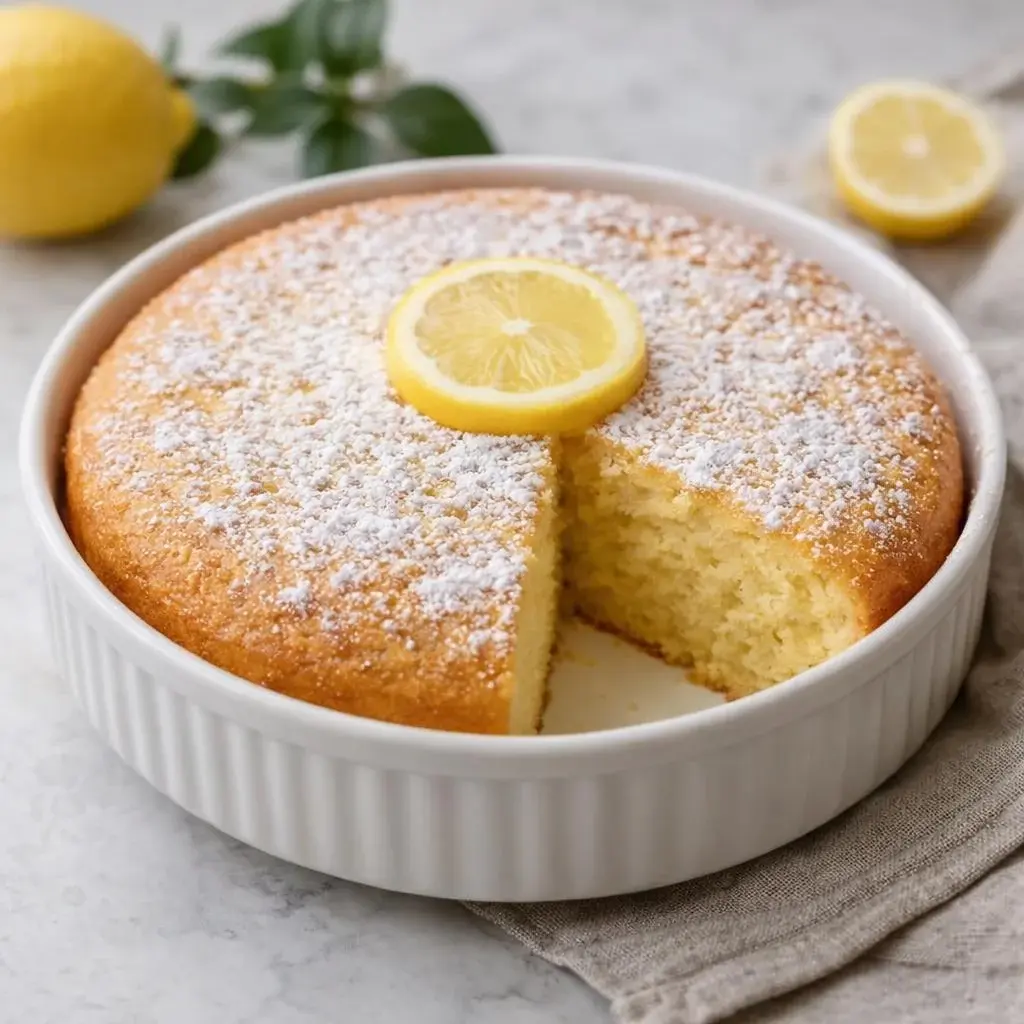
Simply hold the box 10–15 cm above for a light, even dusting. You should see a golden surface beneath a white veil.
11) Cutting and Ideal Texture When Serving
Only cut the cake when it’s completely cool.
The ideal crumb:
- Fine and tender, slightly moist;
- Cooked center without dryness;
- Sharp lemon flavor without bitterness.
If you lift a piece with a fork, it should hold together without excessive crumbling.
Signs of Success (and What to Do if It Goes Wrong)
- Too pale cake: it lacks baking time. Next time, add 2 to 3 minutes. In the meantime, let it cool; it may firm up slightly.
- Toothpick comes out with raw batter: center is not cooked. Return to the oven for another 5 minutes, then retest.
- Too dark surface before fully baked: lower to 165°C or reduce time. Lemons give a vibrant aroma, but the color should remain “golden,” not brown.
- Dry cake: often due to overbaking. Serve it the same day and consider an accompaniment (see below). The recipe aims for perfect baking, not thick crust.
- Granular texture: flour incorporated too quickly or too much mixing after adding dry ingredients. Next time, mix just until incorporated.
Mistakes to Avoid (that Really Change the Outcome)
- Too deep zesting: grated white introduces bitterness. Stick with the yellow.
- Poorly measured juice: if your lemons are very juicy, the batter may appear fluid. Add the juice and double-check: it should remain homogenous, not “liquid.”
- Overcooking: moisture disappears quickly. Aim for even golden color and the center test.
- Sifting while warm: powdered sugar melts and loses the “veil.” Wait until the cake is completely cool.
- Removing too soon: the crumb could break. Respect the 10–15 minutes of rest.
Chef Tips for an Even Brighter Lemon Cake
- Fine zest: the finer and fresher the zest, the rounder the aroma.
- Warm, not hot butter: very hot butter can disturb the balance and harden the batter.
- Reasonable mixing: after adding flour, mix minimally. This is the secret to a fine crumb.
- Just-right baking: a moist lemon cake should come out when cooked but still tender in the center.
Simple Variations (without Changing the Essence of the Recipe)
- With butter or neutral oil: both work. Butter imparts a slightly “richer” flavor; oil remains lighter and very moist.
- Richer finish: instead of a single dusting of powdered sugar, consider adding a second layer after a few minutes (on a well-cooled cake) for a thicker, clean look.
- Lemon intensity: if you like a stronger lemon flavor, simply increase the zest (without altering other quantities) while keeping the batter smooth.
Serving Suggestions and Presentation
Serve the moist lemon cake as is, with a simple accompaniment that respects its flavor.
- Black or green tea: provides a perfect contrast to the acidity.
- Coffee: a great “homemade treat” pairing.
- Thick cream or plain yogurt (a small dollop on the side): softens the lemon without masking it.
- Red fruits (a few berries): brings a refreshing tartness.
For presentation, place the cake on a platter, keeping a slice visible if you cut it in front of guests. The powdered sugar veil should remain light and elegant.
Preparing in Advance and Storage
In Advance
You can prepare it the day before. Allow it to cool completely, cover once cool (with a dome or airtight container).
Storage
- At room temperature, it stays good for 1 to 2 days under a dome. Beyond that, refrigerate but take it out 15 to 20 minutes before serving to restore its moisture.
- In the freezer: possible in portions (well-wrapped) for up to 1 month. Thaw at room temperature, then optionally dust with a light veil of powdered sugar.
Tip: store it without excess powdered sugar if you anticipate too much; you can sprinkle it just before serving for a cleaner look.
When to Enjoy (and How to Maintain Moisture)
The cake is best:
- The same day after complete cooling for a tender crumb;
- Or the next day, after it has had time to stabilize.
Avoid leaving it uncovered: while the lemon stays fragrant, the exterior may lose its shape.
Nutritional Information (Approximate)
For one serving, the estimate varies depending on the size of the mold and portions. On average, count about 250 to 320 kcal per slice. The main contributions come from sugar and butter (or oil), while lemon mainly adds aroma and a bit of vitamin C.
FAQs
Can I make this moist lemon cake in advance and store it?
Yes. Prepare the day before and let it cool completely before covering. At room temperature, it lasts for 1 to 2 days under a dome. To extend freshness, refrigerate and take it out 15 to 20 minutes before enjoying, ensuring it regains moisture.
Why is my lemon cake too wet in the center?
This often happens if it hasn’t cooked enough or if the lemons released much more juice than expected. Check the doneness with a toothpick: it should come out with tiny moist crumbs, not with liquid batter. Add another 5 minutes if necessary.
How do I achieve a tender crumb without the cake becoming dry?
The secret is to bake it just right: look for a regular golden surface, edges pulling away, and a tender center. Remove it as soon as the toothpick test shows “moist crumbs.” Baking powder helps with lift, but overbaking quickly makes the crumb dry, especially with lemon.
Is it really necessary to wait until completely cool before adding powdered sugar?
Yes, this is highly recommended. On a still warm cake, powdered sugar melts and turns into a matte film. On a cold cake, it creates a fine, uniform veil that highlights the cake’s golden color.
Conclusion
You now have everything you need to make a delicious moist lemon cake (no frosting): bright zests, well-measured juice, perfect baking for a tender crumb, and powdered sugar applied only when the cake is cool. Try it for your next tea time, save the recipe, and share it: it’s sure to please with that invigorating lemon flavor!
“`