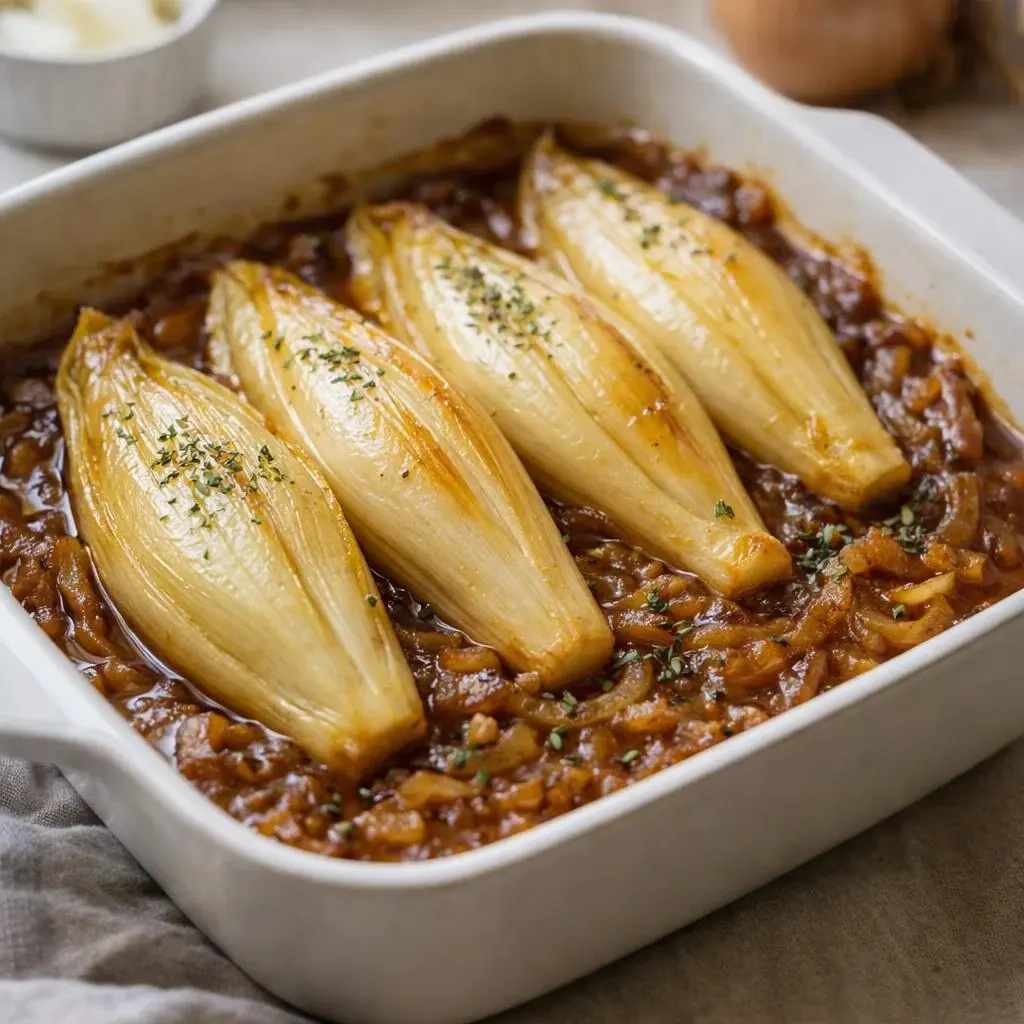
Oven-Braised Endives with Caramelized Onion Sauce: A Flavorful Twist
Oven-Braised Endives with Caramelized Onion Sauce: A Flavorful Twist
Oven-braised endives with caramelized onion sauce are the perfect comfort dish—satisfying without being heavy. With the first bite, you’ll experience the tenderness of the endives, complemented by the gently caramelized sweetness of the onions, uplifted by a hint of vinegar. This recipe ensures that the endives achieve a spoon-tender texture, a beautifully shiny brown sauce, and doesn’t release too much moisture or dry out during cooking.
Why This Oven-Braised Endive Recipe Always Works
Endives are uniquely hearty and slightly bitter when raw, but they transform into a tender delicacy with slow, moist cooking. The key lies in three essential elements:
- Caramelized Onions: Gently heating the onions releases their natural sugars. A small addition of sugar (optional, depending on your taste and the sweetness of the onions) helps achieve a rich brown color and a well-rounded flavor without becoming overly sweet.
- Vinegar Deglazing: Balsamic or wine vinegar cuts through the heaviness of the caramelization, elevating the flavor, much like balancing a wine sauce.
- Oven-Braising: Initially covering the dish reduces rapid evaporation, allowing the endives to cook in a moist environment. Afterward, cooking uncovered helps the sauce to reduce and glaze beautifully.
Ingredients for Tender Oven-Braised Endives
To achieve a glossy caramelized onion sauce and fully coated endives, sticking to the recommended quantities is key. This recipe serves 8 to 10 endives, either whole or halved, with plenty of sauce to generously coat them.
- Endives (8 to 10): Choose firm endives with tightly packed leaves. The base should be white to ivory and not dried out. Depending on size, you can keep some whole (very appealing for presentation) and cut larger ones in half for even cooking.
- Large Onions (2): Opt for yellow onions, ideal for caramelizing. They introduce a natural sweetness and a brown hue to the sauce.
- Butter or Olive Oil:
- Butter: Rich and aromatic, aids in browning.
- Olive Oil: Lighter option, also effective for starting the caramelization.
- Garlic (1 clove): One clove provides aromatic depth without overshadowing the endive or sauce.
- Broth or Water (200–300 ml): The liquid is used for braising and creating a gentle cooking environment.
- Balsamic Vinegar (1 to 2 tbsp) or Wine Vinegar: This ingredient enhances the sauce, providing balance without an overwhelming vinegar taste.
- Sugar or Honey (1 tsp to 1 tbsp, depending on onion sweetness): Start modest; onions are naturally sweet. Adjust to taste.
- Salt and Pepper: Freshly ground pepper is preferred. Salt should be added cautiously, as reducing the sauce concentrates the saltiness.
- Thyme or Bay Leaf (optional): A hint of herb complements the endive and onion flavor.
Selecting the Best Ingredients: What Really Changes the Outcome
Endives: Quality and Preparation
Endives should be fresh: no darkened leaves or soft spots. If your endives are very bitter, check the outermost leaves and remove only the damaged parts.
Onions: The Base for Caramelized Juice
Select onions that caramelize easily for a shiny brown sauce. If they are very sweet, you can reduce the amount of added sugar.
Vinegar: The Sweet-Sour Balance
Your choice between balsamic and wine vinegar depends on personal preference. Balsamic offers deeper flavor and a slightly syrupy texture as it reduces.
Can Certain Ingredients Be Substituted?
Yes, but maintain the logic behind the recipe.
- Broth vs. Water: Water works if necessary, but broth adds more depth.
- Balsamic vs. Wine Vinegar: Both work—start with 1 tablespoon of wine vinegar if that’s what you have, tasting for adjustments at the end.
- Sugar vs. Honey: Honey also aids caramelization but can impart more flavor, so start with a small amount and adjust as needed.
- Herbs: Thyme or bay leaf are interchangeable. If you lack herbs, the vinegar and onion-paired sauce does most of the flavorful work.
Preparation and Organization Before Starting
To create perfect oven-braised endives, prepare your workspace:
- A baking dish large enough to hold the endives without stacking them too high.
- A lid (or a sheet of aluminum foil) for the initial cooking phase.
- A large pan or pot for caramelizing the onions.
- A knife for cutting the endives in half if needed.
- A cutting board and bowl for keeping ingredients organized.
Visual Expectations
The endives should be arranged in the dish before cooking, ready to be coated. The sauce, once caramelized and deglazed, will take on a brown base that reduces beautifully. By the end of cooking, you should achieve a shiny glaze that gently coats the endives without excess liquid pooling at the bottom of the dish.
Step-by-Step Recipe Preparation
Step 1: Prepare the Onions for a Caramelized Juice
Finely slice the onions—uniform pieces yield an even caramelization and a smooth brown sauce. Heat a large pot or skillet with a bit of butter (for flavor) and/or a drizzle of olive oil (to prevent butter from sticking). Add the onions, season lightly with salt, and sauté over medium heat, stirring frequently.
Once they are soft and translucent (about 10 minutes), lower the heat. Continue cooking until they become amber in color, releasing a sweet, caramelized aroma—avoid burning.
Stir in the sugar (or a scoop of honey) and let it melt with the onions for 1 to 2 minutes until the color deepens to a light brown caramel while remaining soft.
Step 2: Add Garlic and Deglaze with Vinegar
Add minced or crushed garlic and stir for 30 seconds to infuse flavor. Pour in the balsamic (or wine) vinegar, watching for it to bubble and lighten; scrape the bottom with a wooden spoon to release flavorful bits stuck to the pan. Allow to reduce for 1 minute to mellow the acidity and create a fragrant, golden-brown base.
Step 3: Pour in the Broth, Then Reduce
Add the broth (or water) all at once while stirring. Simmer gently for 5 to 8 minutes; the sauce should thicken enough to coat the spoon. A good indicator is when you draw a line with the spoon, and the sauce slowly runs back together.
Step 4: Arrange the Endives and Coat
While the sauce reduces, prepare the endives. Trim the base if necessary. If using whole endives, ensure they lie flat in the dish. For halved ones, aim for uniform sizes for even cooking.
Place them tightly in a baking dish without squashing. Pour the sauce over the endives, ensuring they are coated (at least halfway), but not submerged. Cover with a lid or aluminum foil to trap moisture, helping the endives soften.
Step 5: Braise in the Oven Until Tender
Bake slowly at a low temperature (around 160–170°C or 320–340°F) for approximately 45 minutes to 1 hour, depending on the size of the endives and your oven. At the halfway mark (around 30 minutes), check—there should be gentle bubbles around the endives.
To test for doneness, insert a knife into the center of an endive; it should penetrate easily like a well-cooked vegetable.
Step 6: Uncover, Reduce, and Glaze
Remove the lid and continue cooking uncovered. Focus on achieving that glossy finish—reduce for 15 to 25 minutes, keeping an eye on it. The surface should thicken, brighten, and coat the endives nicely. If the sauce is reducing too quickly, lower the temperature or add a bit more broth.
Chef’s tip: halfway through this phase, gently spoon sauce over the endives to encourage even coating and color.
Step 7: Season and Garnish with Herbs
Before serving, taste the sauce and adjust the seasoning with salt and pepper. If the caramel seems timid, a sprinkle of sugar can help, but begin with only a half teaspoon.
For herbs (if using thyme or bay leaf), keep it subtle—either add a few leaves at serving or remove the bay leaf before reducing.
Success Indicators
- Tender Endives: They should cut easily with a fork, with a soft core.
- Shiny Brown Sauce: It should coat without excessive liquid pooling at the bottom of the dish.
- Balanced Flavor: Sweetness from caramelized onions and a lift from vinegar.
- Harmonious Color: Bright brown, without any burnt notes.
Common Mistakes to Avoid
- Over-caramelizing: A burnt smell or blackened bits lead to bitterness in the sauce.
- Not covering initially: Endives may dry out and remain firm.
- Reducing too long uncovered: The sauce thickens but loses a glossy appearance, possibly sticking.
- Serving immediately: The sauce may not coat perfectly right out of the oven; resting for 5 minutes improves texture.
- Over-salting from the start: As endives release moisture, the sauce may become too salty. Adjust at the end.
Tips for Even More Beautiful Oven-Braised Endives
- Choose tightly packed and firm endives: They handle baking better and maintain attractive shape.
- Uniform sizes: If cutting, keep pieces of similar size for even cooking.
- Baste while reducing: This action helps achieve that glossy finish.
- Too thick sauce? Add 1 to 2 tablespoons of broth at the end of reduction and return to uncovered cooking for 3 minutes.
Simple Variations (Without Changing the Essence of the Recipe)
- Lighter caramel: If your onions are very sweet, reduce the sugar (or use only 1/2 teaspoon). The dish will remain sweet-salty without dessert-like flavors.
- More pronounced vinegar: If you enjoy a tangy note, slightly increase the balsamic vinegar (without overdoing it). Taste—the sauce should remain delightful.
- More subtle herbs: Use thyme instead of bay leaf for flavor without overpowering.
Pairing Suggestions
This recipe pairs wonderfully with:
- Steamed or crushed potatoes: Perfect for soaking up all the sauce.
- Plain rice: The sauce blends seamlessly for irresistible flavor.
- Grilled countryside bread: The simplest option for mopping up sauce.
- Poultry or fish: The brown sauce complements without overshadowing the endives.
Serving Presentation
Serve hot, either in the baking dish for a homely feel or plate individually in shallow bowls. Pile the endives neatly and generously spoon over the sauce, aiming for a glossy layer—enough to coat but not drown the dish.
Add a sprig of thyme (or remove the bay leaf before serving) and a final twist of pepper if desired.
Storage and Reheating
This dish can be prepared in advance:
- Refrigeration: Store in an airtight container for 2 to 3 days.
- Reheating: Warm in the oven at 150–160°C (300–320°F) for 15–20 minutes (covered initially), or gently in a saucepan with a splash of water if needed.
The flavor deepens over time as the onions continue to infuse the sauce.
Nutritional Information (Approximation)
On average, each serving (based on 8 servings) contains about 150 to 220 kcal, depending on the amount of butter/oil and sauce reduction. Endives are low in calories and high in fiber; variations mainly come from fats and caramelization.
FAQ
Can I prepare the oven-braised endives with caramelized onion sauce the day before?
Yes. You can braise up to the covered phase, cool, and store. On the day of serving, finish cooking uncovered to reduce and glaze. The flavor often improves with rest; serve hot for a shiny sauce.
How do I know if the endives are cooked enough?
The most reliable test is the knife point, which should slide easily into the center without resistance. If there is still firmness, cover and extend cooking by 10 minutes, then retest.
What if my sauce is too liquid?
Continue cooking uncovered, letting it reduce while spooning over the endives for even coating. If it still doesn’t thicken, increase the heat slightly (without burning) and keep going.
Why does my sauce taste bitter?
This usually results from over-caramelized onions. Cook gently, aiming for amber, not black. A small pinch of sugar at the end can help rebalance flavor.
Can I substitute broth with water?
Yes, this recipe works with water. The broth adds depth, but water suffices if your onions are well-caramelized. Adjust seasoning slightly at the end (salt/pepper) to maintain flavor.
Conclusion
You now have all the tools to create delicious oven-braised endives with caramelized onion sauce: spoon-tender consistency, a glossy brown sauce, and a sweet-salty flavor enhanced by vinegar. Try this recipe out, make adjustments to your taste, and enjoy every last bite while savoring the sauce… and don’t forget to share the recipe!