Stop Wasting Tomatoes! Here’s How to Store Them Right
Stop Wasting Tomatoes! Here’s How to Store Them Right
For gardeners, there’s nothing like biting into a fresh, homegrown tomato straight from the vine. The sweet, tangy flavor and aromatic scent are unmatched, making store-bought varieties seem bland in comparison. But what happens when you pop that perfect tomato into the fridge? You might be in for a disappointing surprise.
Why Refrigerating Tomatoes Ruins Their Flavor
Most of us have experienced a lackluster tomato after refrigerating it. The intense flavors are muted and the texture can become unappetizing. This isn’t just your imagination; there’s scientific evidence behind this phenomenon. Refrigeration alters tomatoes on both a cellular and chemical level, drastically changing their flavor and texture.
What Makes a Tomato Taste Good?
Tomatoes owe their delightful taste to a blend of sugars, acids, and volatile compounds (VCs). These tiny, aromatic molecules are responsible for the rich flavors we associate with freshly picked tomatoes. Our taste buds may detect sweetness and acidity, but it’s our sense of smell that enhances the overall experience.
Unfortunately, cold temperatures can damage these delicate compounds, leading to a loss of flavor.
How Cold Affects Your Tomatoes
Tomatoes originated in the warm climates of the Andes in South America, meaning they are not equipped to handle cold temperatures. A refrigerator typically operates at about 35-40 degrees Fahrenheit. When tomatoes are exposed to these cooler temperatures, it damages the membranes in their cells, causing important flavor compounds to leak out. Once these membranes are compromised, the result is a tomato that looks fine but lacks its vibrant flavor.
The Texture Dilemma
In addition to losing flavor, refrigerated tomatoes also suffer from a change in texture. Tomatoes contain pectin, which gives them their delightful, gel-like consistency. However, cold temperatures break down pectin, resulting in a grainy or mealy texture. This altered texture further diminishes the flavor experience, reducing both sweetness and acidity.
A 2016 study demonstrated that ripe tomatoes stored in the fridge lost over 60% of their volatile compounds after just one week, and these compounds did not return even when the tomatoes were brought back to room temperature.
Lessons from the Past
Growing up, I noticed that my dad’s tomatoes tasted far better than my mom’s, which were often stored in the fridge. My dad, an off-the-grid homesteader, kept his tomatoes on the picnic table in the shade, allowing them to ripen naturally. The difference in storage practices contributed significantly to the exceptional flavor of those tomatoes.
How to Store Tomatoes for Optimal Flavor
Now that we know to steer clear of the refrigerator, how should we store our fresh tomatoes to maintain their exceptional taste? Follow these tips:
- Store tomatoes at room temperature (55-75°F).
- Avoid direct sunlight and place them in a single layer, ensuring they aren’t touching.
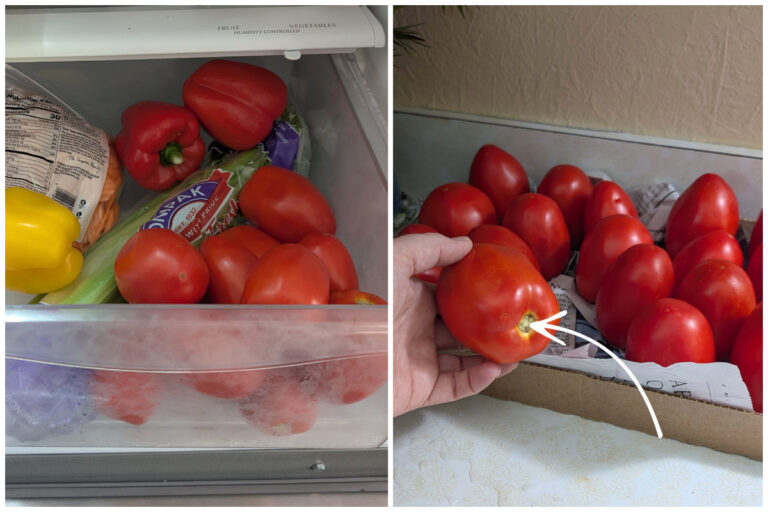
- If counter space is limited, consider using a cardboard box with crumpled newspaper between layers.
- Always keep tomatoes stem-side down to prevent moisture loss and mold.
- For fully ripe tomatoes, consume them immediately, while slightly underripe tomatoes can continue to ripen off the vine.
As you prepare to can your favorite tomato sauces or dishes, remember to prioritize the ripest tomatoes first for optimum flavor.
Conclusion
To savor the full, vine-ripened taste of your tomatoes, keep them out of the fridge. While it may seem like a safe option for produce, refrigeration is often a flavor graveyard for tomatoes. Handle them gently, store them properly, and enjoy their rich, homegrown flavor at its peak.