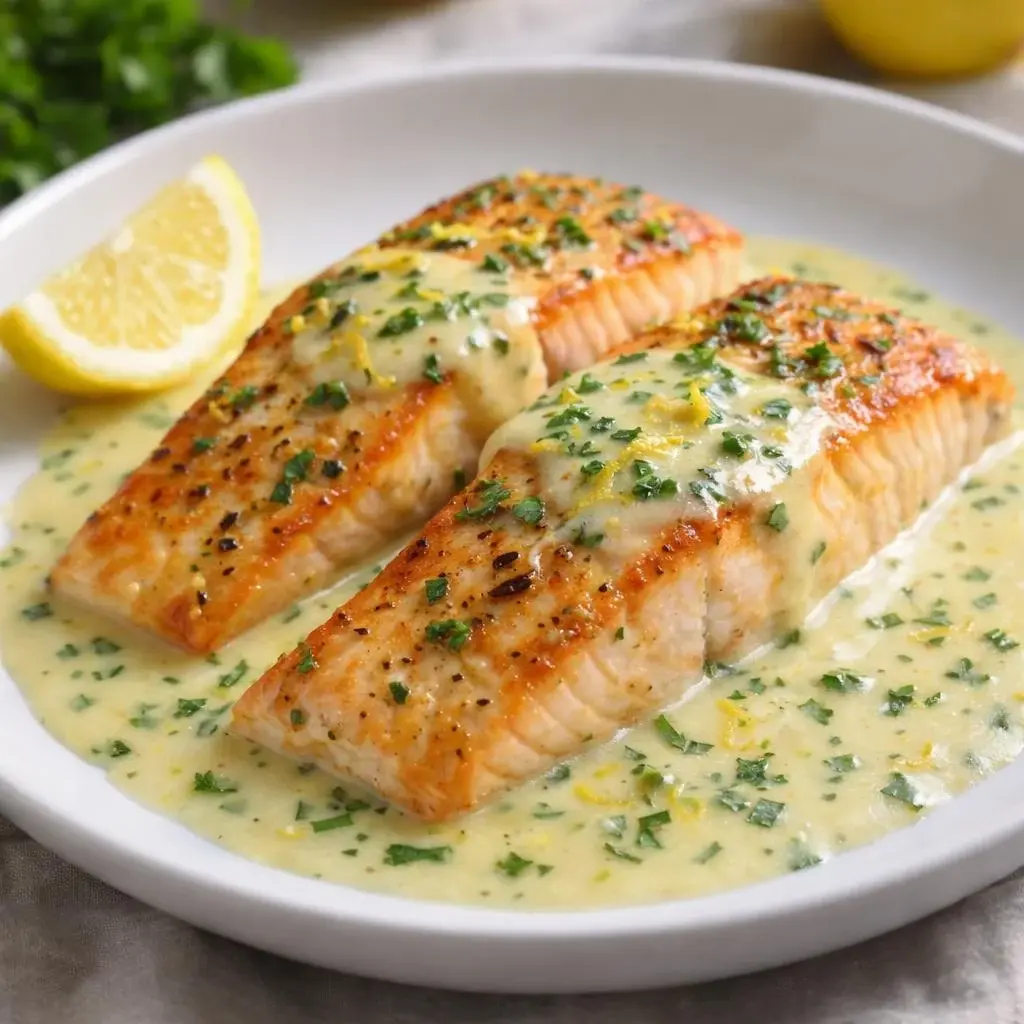
Pan-Seared Salmon Fillets with Creamy Lemon Herb Sauce
Pan-Seared Salmon Fillets with Creamy Lemon Herb Sauce
Discover the perfect balance of flavor and texture with these pan-seared salmon fillets drizzled with a creamy lemon herb sauce. This dish is guaranteed to please everyone at the table, combining a delectable taste with a smooth sauce that beautifully coats the salmon.
Why This Recipe Works
Achieving the best results relies on three essential steps:
- Searing: Cook over high heat for a golden crust, yet briefly enough to keep the center tender.
- Thickening the Cream: Gently thicken without boiling.
- Final Addition of Salmon: Return the salmon to the sauce for coating, not for further cooking.
This method yields a creamy sauce that clings to a spoon, accented by fresh citrus notes and herbs.
Ingredients: Choose Wisely for a Tender Texture
This recipe serves 2 to 4 people (depending on the size of the fillets and your appetite). Here’s what you’ll need:
Salmon Fillets
- 2 to 4 salmon fillets (with or without skin)
The salmon is the star of this dish. If the skin is intact, it aids in searing by protecting the flesh and enhancing color. Aim for a beautifully golden exterior and a tender interior. Avoid overcooking to ensure juiciness.
Lemon (Zest + Juice)
- 1 lemon (zest + 1 to 2 tablespoons of juice, to taste)
Lemon flavors the entire sauce: the zest adds intense freshness while the juice provides balancing acidity.
Heavy Cream
- 200-300 ml heavy cream
This is the base for the creamy texture. Heavy cream gives a smooth consistency, and a short reduction is all you need for a sauce that clings well. We want a coating sauce, not too thick.
Fresh Herbs
- 1 small handful of parsley or chives (2 to 3 tablespoons, minced)
Herbs add a fresh garden note that contrasts nicely with the creamy richness and the acidity of the lemon.
Butter and Neutral Oil
- 1 to 2 tablespoons butter
- 1 tablespoon neutral oil (sunflower, canola, or grapeseed)
Butter adds richness and color but burns quickly, hence the use of neutral oil ensures a golden sear without bitterness.
Garlic (Optional)
- 1 clove garlic (optional)
Garlic is optional but enhances the homemade flavor. Add it in the sauce phase, allowing it to infuse without becoming dominant.
Seasonings
- Salt
- Pepper
- Optional: a pinch of sweet paprika or lemon pepper
Salt brings out the sweetness of the salmon, and pepper adds depth. Paprika can introduce a mild warmth, while lemon pepper heightens the citrus notes.
Prep Ahead for a Stress-Free Cooking Experience
Before cooking, set yourself up for success:
Prepare the Salmon
- Take the fillets out of the fridge a few minutes before cooking (they shouldn’t be cold).
- Gently pat dry if necessary to encourage a good sear.
- Season with salt and pepper on both sides.
Prepare the Lemon and Herbs
- Grate the lemon zest before juicing.
- Juice the lemon.
- Chop the herbs and have them ready for the sauce.
Prepare the Sauce (Without Cooking Immediately)
- If using garlic, chop or crush it.
- Measure the cream for convenience.
How to Choose the Right Salmon
To keep the fillets tender, start with quality salmon:
- With Skin: Ideal for better coloration and moisture retention.
- Without Skin: Searing is possible, but you must closely monitor the heat and cooking time.
- Thickness: For thick fillets, shorten the searing time and adjust sauce time accordingly. For thin fillets, watch closely to prevent overcooking.
Step-by-Step Recipe Preparation
Follow these detailed steps to ensure success:
1. Prepare the Fillets
Remove the fillets from the refrigerator a few minutes prior; they should not be cold. Lightly dry them with paper towels and season with salt and pepper evenly on both sides.
2. Heat the Pan
In a large skillet, add 1 tablespoon of neutral oil and 1 to 2 tablespoons of butter. Heat over medium-high. When the butter foams and smells nutty, you’re ready to add the salmon. This combination ensures a golden sear without bitterness.
3. Sear the Salmon
Place the fillets in the skillet without moving them to achieve a good color. For fillets with skin, start skin-side down for 3 to 5 minutes. For skinless fillets, sear one side for 3 to 4 minutes, ensuring the edges become opaque and the color transitions from pink to golden.
4. Flip the Fillets
Turn the fillets and cook for an additional 1 to 2 minutes. The goal is not to cook through completely, keeping the flesh moist for the finishing sauce.
5. Remove and Prepare for the Sauce
Transfer the fillets to a plate, leaving them uncovered (to prevent sogginess). Reduce the heat to low and add garlic if using, sautéing for 10 to 20 seconds until fragrant but not colored.
6. Deglaze and Add Cream
Drizzle a little lemon juice (1 to 2 tablespoons) into the pan, scraping the bottom to release any flavorful bits. Pour in the cream, stirring gently until combined, then let it thicken over low heat for 2 to 4 minutes without boiling.
7. Finish the Sauce
Check the texture; it should coat the back of a spoon and leave a trail when you run your finger through it. Add lemon zest and minced herbs before gently warming for another 30 to 60 seconds. Taste and adjust seasoning as needed.
8. Coat the Salmon
Return the fillets to the pan, placing the prettiest side up, and allow them to warm in the sauce for 1 to 2 minutes.
9. Serve Immediately
Serve each fillet on a warm plate, spooning the creamy sauce over the top. Optionally, garnish with some additional fresh herbs for a pop of color and flavor.
Common Mistakes to Avoid
- Boiling the cream can cause it to curdle.
- Flipping the salmon too early may tear the flesh.
- Long searing times can result in dry fish.
Quick Tips for a Silky Sauce
- Maintain a gentle heat after deglazing to control texture.
- Taste mid-cooking to adjust acidity or seasoning.
- Serve on warm plates to keep the sauce from thickening too quickly.
Simple Variations
Consider these easy tweaks without altering the dish’s essence:
- Omit the garlic for a cleaner lemon flavor.
- Add only one spice option at the end to avoid prolonged cooking.
- The method remains the same whether using skin-on or skinless salmon.
Perfect Pairings
- Basmati or pilaf rice to soak up the creamy sauce.
- Steamed potatoes or mashed potatoes for a natural blend of textures.
- Green vegetables (like green beans or sautéed zucchini) to balance the richness.
Storage and Reheating
For the best experience, enjoy the dish the same day. If needed, store in an airtight container in the fridge for up to 24 hours. Reheat gently in a skillet over low heat or using a double boiler to avoid boiling. Keep in mind, the salmon may lose some moisture, so serve with warm veggies or rice.
Nutrition Estimate
Each serving (from 4 servings) contains approximately 400 to 520 calories, depending on the cream content and filet size. This rich yet refreshing dish balances the creaminess with bright lemon and herb flavors.
FAQ
How do I know if the salmon is cooked without drying it out?
The salmon is ready when the edges become opaque, and it feels slightly tender to the touch. It will finish cooking in the sauce.
Why does my lemon cream sauce turn grainy?
This commonly occurs due to high temperatures; keep the cream at low heat and avoid boiling.
Can I use a lighter cream substitute?
Yes, but expect a less creamy texture. If using lighter cream, reduce heat and cook for a shorter time to avoid curdling.
When should I add the herbs and zest?
Add them at the end of the sauce preparation to preserve their fresh flavors and vibrant color.
Conclusion
Your pan-seared salmon fillets topped with creamy lemon herb sauce are ready to impress! Serve immediately with the remaining sauce to ensure everyone gets to enjoy this gourmet dish. Bon appétit! If you try it, share your experience with friends—this delightful dish is bound to please!